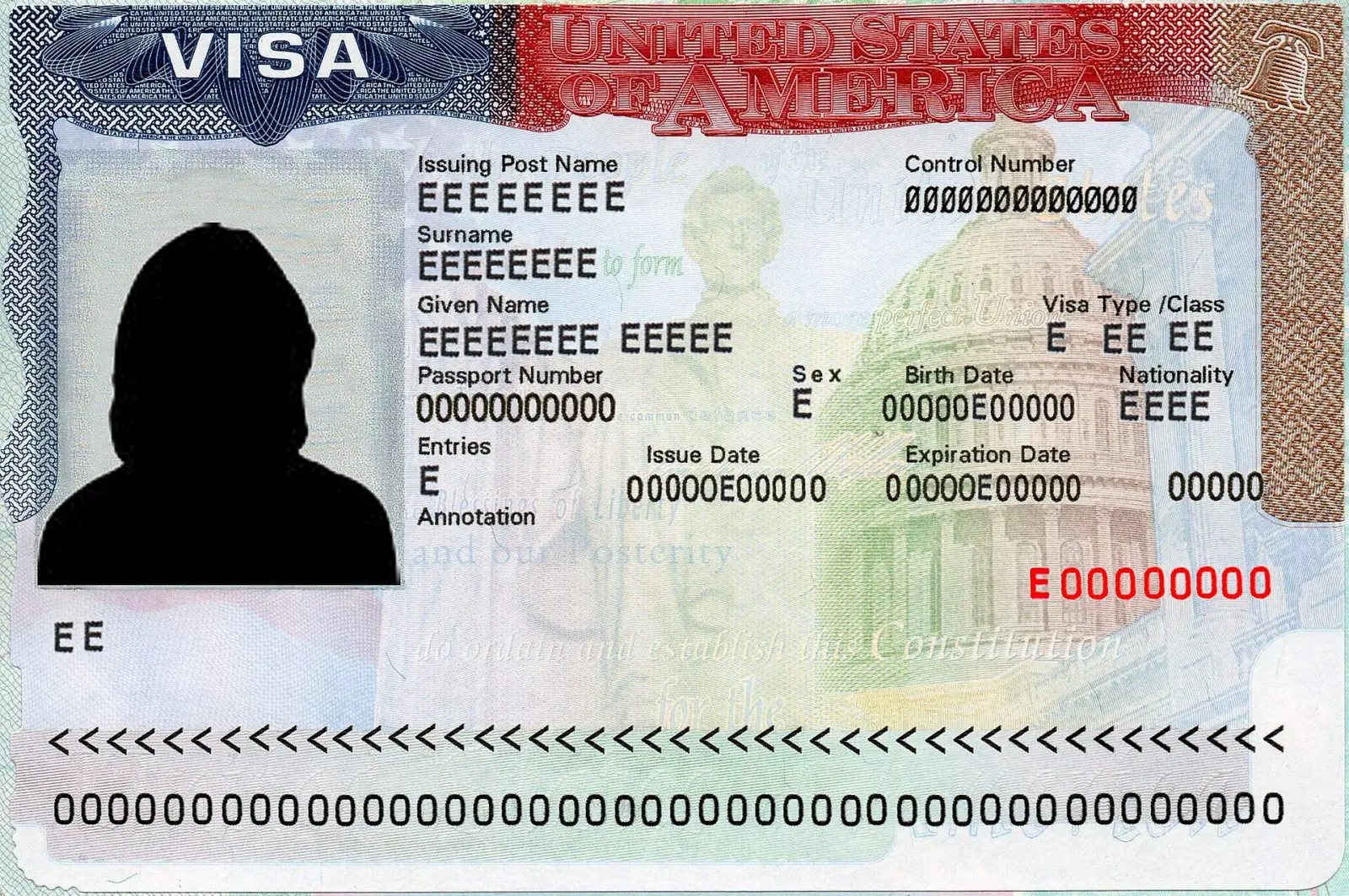
The visa number is the red, roughly 8-digit number printed in the lower right corner of your US visa stamp — it's not your passport number, your visa's control number, or your A-Number.
"Immigrant visa number" means something else entirely — it refers to whether a visa is available for your green card category under the State Department's monthly Visa Bulletin, not a number printed anywhere.
Most forms asking for "the visa number" want the number from your visa stamp, but a few — especially green card and adjustment of status forms — are really asking about visa availability instead.
Where Is the Visa Number on a US Visa Stamp?
The visa number is printed in red ink in the lower right corner of your US visa stamp (also called the visa foil), the sticker a consular officer places in your passport when your visa is issued. It's typically 8 digits, though older visas sometimes show a single letter followed by numbers.
On most current US visas, the visa number has a few consistent features:
Printed in red ink, not black
Located in the lower right corner of the visa foil
Usually 8 digits, sometimes preceded by a letter
Different from the visa's "control number," a separate field that serves an internal tracking purpose
If you're comparing numbers on the page, the visa number is not your passport number (printed on your passport's own biographic page, issued by your home country) and not the visa's control number, even though both sit close by on the same document. According to USCIS, immigrant visa stamps also carry your Registration Number (A-Number) and IV Case Number in labeled fields — which is exactly why it's easy to grab the wrong one on a small, crowded document.
A "nonimmigrant visa number" isn't a separate type of number
It's this same red visa number, just on a temporary visa like F-1, B1/B2, H-1B, or J-1. It looks the same and sits in the same spot no matter which visa category you have.
What Is the US Visa Number Used For?
The visa number identifies that specific visa document — not you personally. USCIS, the State Department, and other agencies use it to confirm which visa a form or record is referencing.
You may be asked for it when:
Completing a DS-160 and referencing a previous US visa
Reporting a lost or stolen passport and visa to your embassy or consulate
Confirming travel or entry history tied to a specific visa
Providing visa details to a school, employer, or government agency
Not every immigration form asks for the visa number, and some forms that sound similar are asking for something else. If a field specifically says "visa number" or "visa foil number," use the red number exactly as printed. Entering your control number, passport number, or A-Number instead can trigger delays or a Request for Evidence while the agency sorts out the mismatch.
Visa Number vs. Control Number vs. Passport Number vs. A-Number vs. I-94
These identifiers sit close together on the same documents, which is exactly why people mix them up. Here's how they compare:
Identifier
Where to find it
Format
Identifies
Visa number
Lower right corner of visa stamp, in red
\~8 digits, sometimes 1 letter + digits
The specific visa document
Control number
Near the top of the visa foil, in black
11 digits
Tracks your DS-160 through the State Department's CEAC system, not personal ID
Immigrant visa stamp ("Registration Number") or green card front
7–9 digits, prefixed with "A"
You, personally — permanent, never changes
I-94 number
CBP arrival/departure record
11 characters (digits only, or digits with a letter for records issued since 2019)
Your entry and authorized stay, not the visa itself
Your A-Number is worth calling out specifically, since it's the one most often confused with the visa number. Unlike the visa number, which changes with every new visa you're issued, your A-Number is assigned once and stays with you across your entire immigration history — the same way your green card number identifies a specific card while your A-Number identifies you.
What If Your Visa Number Is Faded, Missing, or Unreadable?
Visa foils fade or wear at the edges over time, especially on older visas or well-traveled passports. If the red visa number on your stamp isn't clearly legible:
Check prior paperwork first. A DS-160 confirmation or old visa application may still have the number recorded even if the physical stamp has faded.
Look at related documents. If your visa was issued as part of an immigrant visa package, your USCIS Immigrant Fee handout or immigrant data summary may list related case numbers, though not necessarily the visa foil number itself.
Follow the form's instructions. Some forms allow you to note the field as unreadable rather than guess. Don't estimate digits — an incorrect number typically causes more delay than an honest note that the field is illegible.
What Is an "Immigrant Visa Number" — and Why Does Availability Matter?
This is the meaning of "visa number" that trips people up, because it isn't printed anywhere — it's a status, not a digit string.
How the Annual Caps and Priority Dates Work
Congress sets annual limits on family-sponsored and employment-based immigrant visas. Under the Immigration and Nationality Act:
Family-sponsored preference visas are generally capped at 226,000 per year.
Employment-based preference visas are capped at a minimum of 140,000 per year.
Immediate relatives of US citizens — spouses, unmarried children under 21, and parents of adult citizens — aren't subject to either cap, so a visa number is always considered available to them.
Everyone else in a capped category has to wait their turn. When a qualifying relative or employer files a petition, that filing date becomes your "priority date" — your place in line. Each month, the State Department publishes the Visa Bulletin, listing cut-off dates by preference category and country. If your priority date falls before the relevant cut-off, a visa number is generally available to you.
Availability Alone Doesn't Finish the Case
A current priority date and an approved petition don't guarantee you can adjust status inside the US — how you entered the country and whether any inadmissibility ground applies still control that. You can move forward with an interview abroad, or, if you were lawfully admitted or paroled into the US and are otherwise admissible, filing to adjust status.
USCIS is direct about this: "A visa must be available before you can take one of the final steps in the process of becoming a lawful permanent resident," and how long that takes "depends on your priority date, preference category, and the country to which the visa will be charged," according to USCIS's guidance on visa availability. Visa availability is only one gate — to adjust status inside the US you generally also need to have been "inspected and admitted" or "inspected and paroled" by an immigration officer, according to USCIS's adjustment of status eligibility guidance.
Visa numbers and the rules around visa availability are set under federal immigration law, and they work identically no matter which state you live in — USCIS and the State Department issue and track these numbers centrally. Some state agencies, like a DMV processing a driver's license application, may ask you to present the physical visa or passport rather than just the number. If you're unsure what a state agency specifically requires, check with that agency directly.
How an Immigration Lawyer Can Help
In Marble's own case notes, mixed-up visa-related numbers come up most often around marriage- and family-based green card filings — and usually surface only after USCIS issues a Request for Evidence, rather than being caught beforehand.
An immigration attorney can review your documents to confirm you're using the correct identifier on each form before you file, rather than after an agency flags a mismatch. If you're not sure whether your case is waiting on visa availability or something else entirely, an attorney with Marble can also help you read your priority date against the current Visa Bulletin and explain what happens next.
Final Thoughts
Most of the confusion around "visa number" comes down to two things: several similar-looking numbers crowded onto one small document, and a completely separate technical meaning that isn't printed anywhere at all. Once you know the red number is the one your forms usually want — and that "immigrant visa number" is really about whether your category is current — the rest of the paperwork gets a lot less intimidating.
Frequently Asked Questions
Disclaimer: This article is for general informational purposes only and does not constitute legal advice. Immigration law is federal and subject to change. For guidance specific to your situation, speak with a licensed immigration attorney.
Share with
Author Bio
The Marble Team
Your family & immigration law firm
We are Marble - a nationwide law firm focusing on family & immigration law
DisclaimerAttorney Advertising. Prior results do not guarantee a similar outcome. The individuals represented in photographs on this website may not be attorneys or clients, and could be fictional portrayals by actors or models. This website and its content (“Site”) are intended for general informational purposes only. It does not constitute legal advice and is no substitute for consulting a licensed attorney. Only an attorney can provide you with legal advice, only after considering your specific facts and circumstances. You should not act on any information on the Site without first seeking the advice of an attorney. Submitting information via any of the forms on the Site does not create an attorney-client relationship and no such communication will be treated as confidential. Marble accepts clients for its practice areas within the states in which it operates and does not seek to represent clients in jurisdictions where doing so would be unauthorized.